Zero Liquid Discharge (ZLD) Systems in Bangladesh
High-recovery water reuse schemes — ZLD and MLD — that turn effluent back into process water and leave solids rather than a discharge stream.
Zero Liquid Discharge means exactly what it says: the site discharges no liquid effluent at all. Every cubic metre is recovered as reusable water and the dissolved solids that were in it end up as a solid or a slurry for disposal. It is the most demanding form of wastewater treatment, and it is increasingly the condition attached to operating in a water-stressed catchment or a tightly regulated economic zone.
The economics of ZLD are decided in the design, not the equipment list. The final concentration stage is thermal, and evaporating water is expensive; a good scheme therefore pushes as much recovery as physically possible into the membrane stages, where separation costs a fraction as much per cubic metre, and leaves the evaporator only the smallest workable brine stream. Where regulation allows a small compliant discharge, MLD achieves most of the benefit at substantially lower cost — and WTBL will say so rather than sell the bigger system.
How a ZLD plant works.
- 01
Conventional effluent treatment
ZLD starts with a properly working ETP. Organic load, colour and suspended solids must be removed conventionally first, because sending them to a membrane stage simply fouls it.
- 02
Tertiary treatment and softening
Filtration, activated carbon and chemical softening remove the hardness, silica and residual organics that would scale or foul the membranes. This stage is what determines whether the RO stages achieve their design recovery or spend their life being cleaned.
- 03
High-recovery reverse osmosis
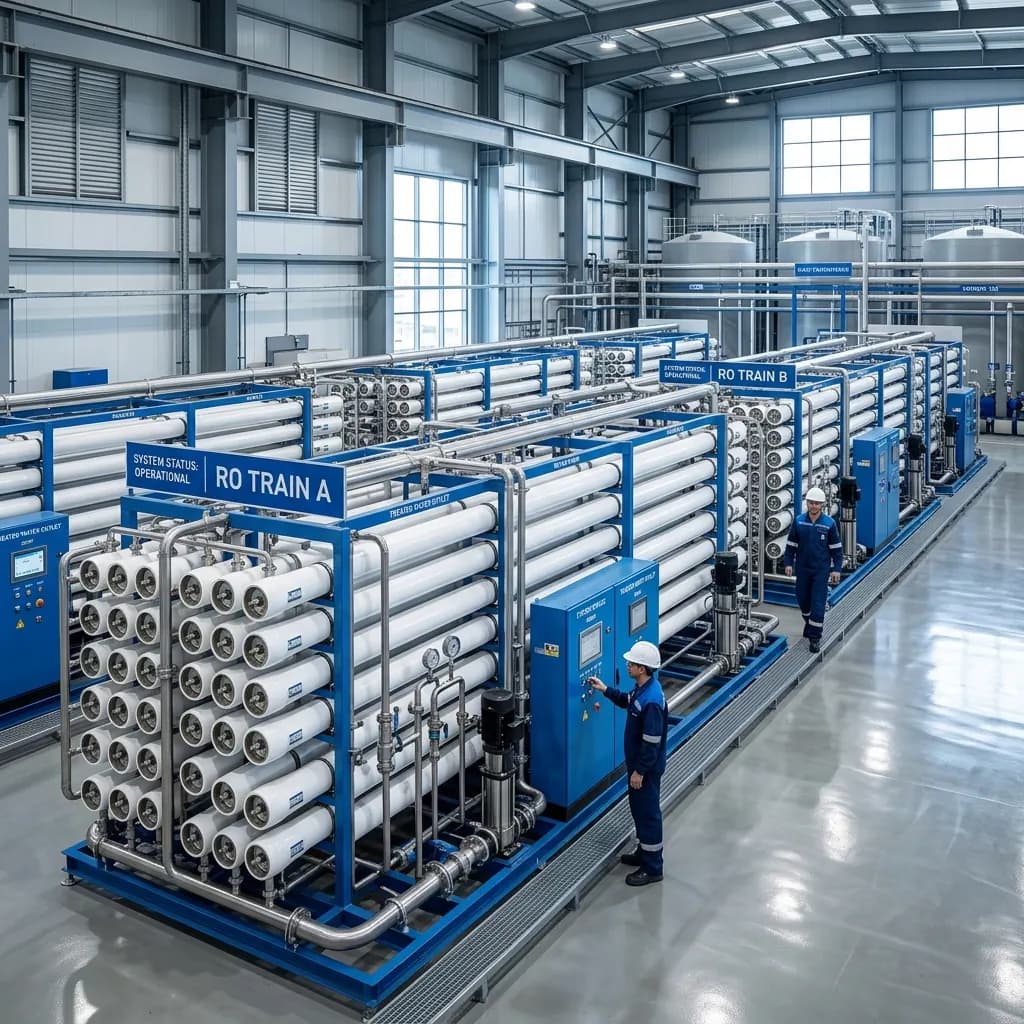
Multi-stage RO, often with intermediate softening between passes, recovers the bulk of the water as permeate suitable for process reuse. Antiscalant selection and cleaning regime are as important to recovery as the membrane specification itself.
- 04
Brine concentration
The reject from the RO stages is concentrated further — by disc-tube RO, brine concentrator or evaporator — reducing the volume that has to be handled thermally to as little as the chemistry permits.
- 05
Evaporation and crystallisation
The final concentrate is evaporated and crystallised, leaving a salt or sludge for disposal and condensate that returns to the process. This is where ZLD's energy cost lives, which is why every stage upstream exists to make this stream smaller.
Scope of supply.
Feasibility and water balance
A site water balance and recovery study that establishes what is achievable, what it will cost to run, and whether MLD rather than full ZLD is the better commercial answer.
Membrane system design and supply
High-recovery RO design using DuPont FilmTec membranes, supplied by WTBL as an authorised DuPont Water Solutions distributor in Bangladesh, together with pressure vessels and RO skids built in-house.
Chemical programme
Antiscalant, softening and CIP cleaning chemistry matched to the specific feed water, supported by WTBL's chemical division and its Italmatch partnership.
Retrofit of existing plants
Adding recovery stages to an existing ETP to move a site from discharge towards MLD or ZLD, typically driven by a new regulatory condition or by freshwater supply becoming the limit on production.
Where ZLD systems are used.
- Textile dyeing and washing
- Tanneries
- Economic zones with strict discharge conditions
- Pharmaceuticals
- Power and heavy industry
- Sites where freshwater supply limits production
Talk to an engineer, not a form
Every plant is sized from the client's own effluent or feed water analysis. Send your figures and WTBL will come back with a process route and an indicative scope.
Contact WTBLTechnical documents
ZLD — Frequently Asked Questions
Straight answers to the questions buyers ask most often before commissioning a ZLD system.
What is Zero Liquid Discharge (ZLD)?
ZLD is a treatment strategy in which a facility discharges no liquid effluent at all — every drop is recovered as reusable water, and the dissolved solids are concentrated into a solid or slurry for disposal. It typically combines pre-treatment, high-recovery reverse osmosis, and thermal evaporation or crystallisation.
What is the difference between ZLD and MLD?
MLD (Minimal Liquid Discharge) recovers most of the water — commonly 90 to 95 percent — and discharges a small concentrated stream, while ZLD recovers effectively all of it and leaves only solids. MLD costs and consumes substantially less energy, so it is often the right answer where regulation permits a small compliant discharge and ZLD is the answer where it does not.
Why is ZLD expensive to run?
The final concentration stage is thermal, so ZLD's operating cost is dominated by the energy needed to evaporate the residual brine. Good ZLD design pushes as much water recovery as possible into the membrane stages, where separation is far cheaper per cubic metre, and leaves the evaporator only the smallest workable stream.
Which industries in Bangladesh need ZLD?
ZLD is most often required of textile dyeing and washing plants, tanneries, and facilities inside economic zones with strict discharge conditions, as well as any site where a receiving water body cannot accept further load. It is also adopted voluntarily where freshwater supply is the binding constraint on production.